The building
Published
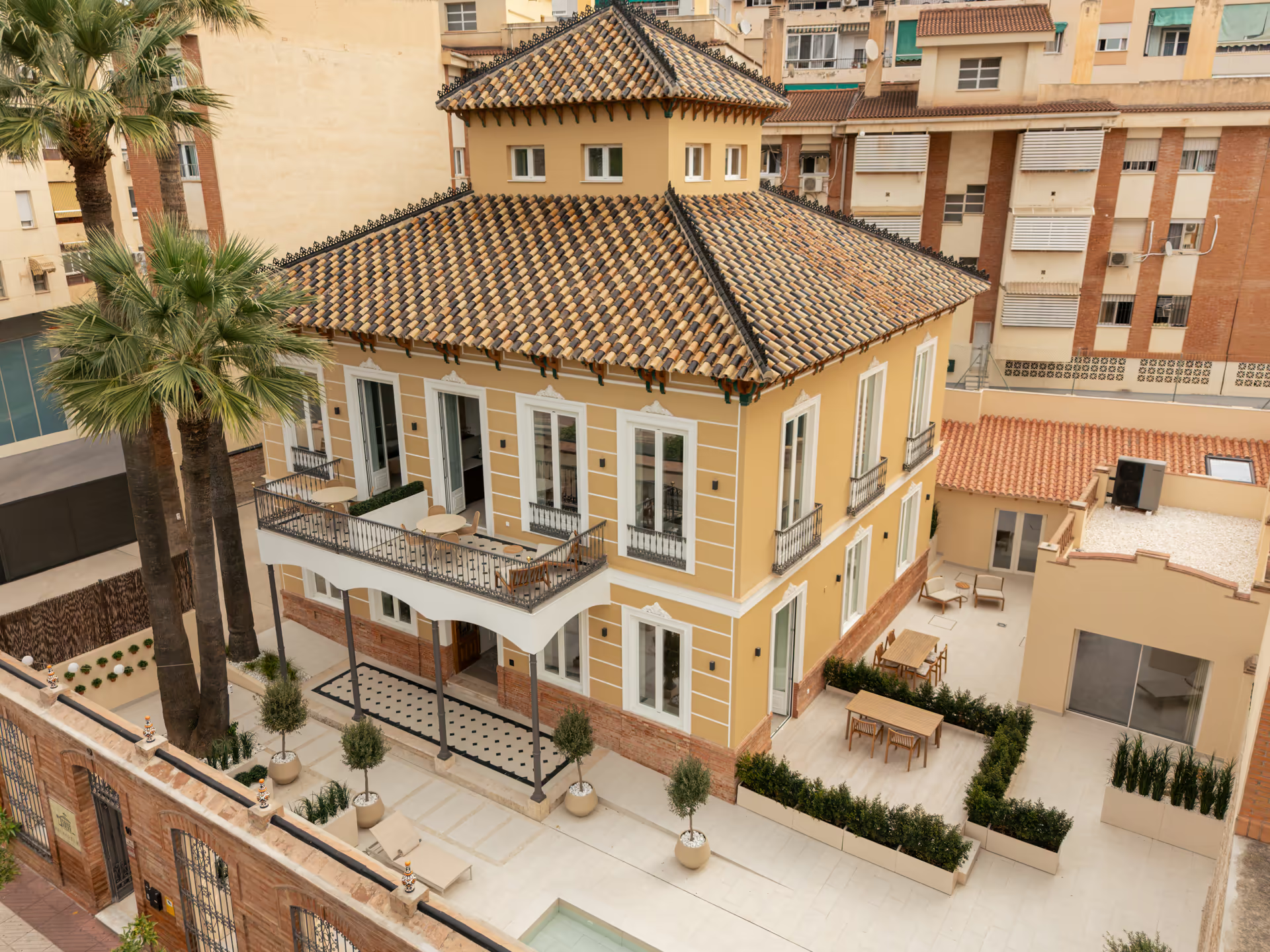
A 1908 villa, restored for people who live and work in it
What was kept at Palacete 10, what was renewed behind the walls, and why that split matters more to someone living there for several months than to someone looking at photographs.
Written by Palacete 10
What a restored heritage building has to get right
A heritage building in Málaga can look impressive in photographs and still be a poor place to live for several months. The usual worries are familiar to anyone who has placed an employee in an old apartment: cold rooms in winter, noise through the floor, weak internet and a hot water supply that cannot keep up. Palacete 10 is a villa from 1908. Its restoration kept three original elements and renewed the systems that make the residences work today.
The short version is that the character stays visible and the infrastructure is new. The longer version is below, because the detail is what tells an HR or Global Mobility manager whether the building will cause problems once someone has moved in.
What was kept
Three original elements remain: the façade, the monumental staircase and the encaustic floors. They are the reason the building reads as what it is from the street and from the entrance. They are part of the building itself rather than decoration added to make something new look old, and they were restored rather than replaced.
What was renewed
The systems a resident relies on every day were renewed: the floors, the water and electrical systems, the insulation and the hot water system, with high-speed fibre installed throughout the building.
Insulation
Wall and roof insulation has been upgraded so that the indoor climate holds steady despite the age of the building. In a villa of this period that is the difference between a residence that is comfortable in January and August and one that depends on running the air conditioning constantly.
Acoustic separation
Five residences share one building, so sound between them matters as much as anything visible. Sound-insulating floating floors were laid between residences to reduce the everyday noise that travels between units and to give each household its privacy.
Heating, cooling and hot water
Each residence has its own independent heating and cooling, controlled by the resident. Domestic hot water is produced by an aerothermal system. The distinction is worth stating precisely: aerothermal technology is used for the hot water, not for heating and cooling the building. Climate control is individual to each residence, and bedrooms also have ceiling fans.
Internet
Fibre runs throughout the building, and each residence has its own secure Wi-Fi network and password off that central connection. For someone working remotely, taking video calls or dealing with colleagues in other time zones, a private network is part of the basic specification rather than an extra.
What the resident actually notices
Someone arriving at Palacete 10 sees the history first. The things that make daily life comfortable are mostly out of sight: the insulation in the walls and roof, the floating floors, the hot water plant and the fibre. Inside the residence, the practical equipment is what gets used every day: a fully equipped kitchen, an in-unit washer and dryer, air conditioning and heating, Bolia interiors and premium beds, and keyless 2N entry so that nobody needs to hand over a key on arrival.
Beyond the residences, the building has a residents-only work suite open 24 hours a day and one secure parking space for each residence. There are nine en-suite bedrooms across the five residences, from Toro, the accessible residence with one bedroom and a private home office, to the four two-bedroom residences. Every residence has a private terrace.
Why the distinction matters to whoever places the employee
For a corporate placement, the useful questions about an old building are practical ones. Is it quiet between residences? Can the occupant control the temperature in their own home? Is the internet private and reliable enough for client calls? Can they cook and do laundry without leaving the building? The answer to each depends on what was renewed, not on what was preserved.
That is why we describe the building in two halves. The façade, the staircase and the floors give the villa its identity. The insulation, the acoustic floors, the climate control, the hot water system and the fibre are what allow someone to live there for several months without noticing the building's age in any way that matters.
You can see how the residences are laid out on the residences page, read more about the restoration on the building page, or check what is included in a stay in the FAQ. If you are planning a placement in Málaga, request a corporate proposal through the contact page and we will reply within 24 hours.
Tags
- Building
- Restoration
- Corporate housing
- Málaga
Updated